Roofers size a dumpster by squares, not cubic yards, and that is the right instinct. A square is 100 square feet of roof, and tear-off shingles are heavy. Tell us the square count and how many layers are coming off, and we connect you with a local roll-off company in Morris, MN that places the can where the crew can throw straight from the eave.
How many squares fit
These are typical ranges for single-layer asphalt tear-off. Weight usually runs out before space does.
- 10 yard: up to about 15 squares, a garage, small ranch or one roof face
- 20 yard: roughly 20 to 30 squares, the size most single-family reroofs land in
- 30 yard: larger homes, steep cut-up roofs with lots of waste, or jobs replacing decking too
Two layers coming off? Plan on roughly double the weight per square, which often means a second can or a swap partway through.
Shingle weight adds up fast
One square of 3-tab asphalt shingles weighs around 200 to 250 pounds. Architectural shingles run closer to 250 to 400. A 25-square architectural roof can easily land at 3 to 5 tons once you add felt, ice and water shield, and nails. Most haulers bill overage per ton above the included allowance, so an honest square count on the phone saves surprises later. Tile, slate and wet cedar shakes are a different class entirely; mention them so the hauler can match a heavier-rated box.
Placing the can by the drop zone
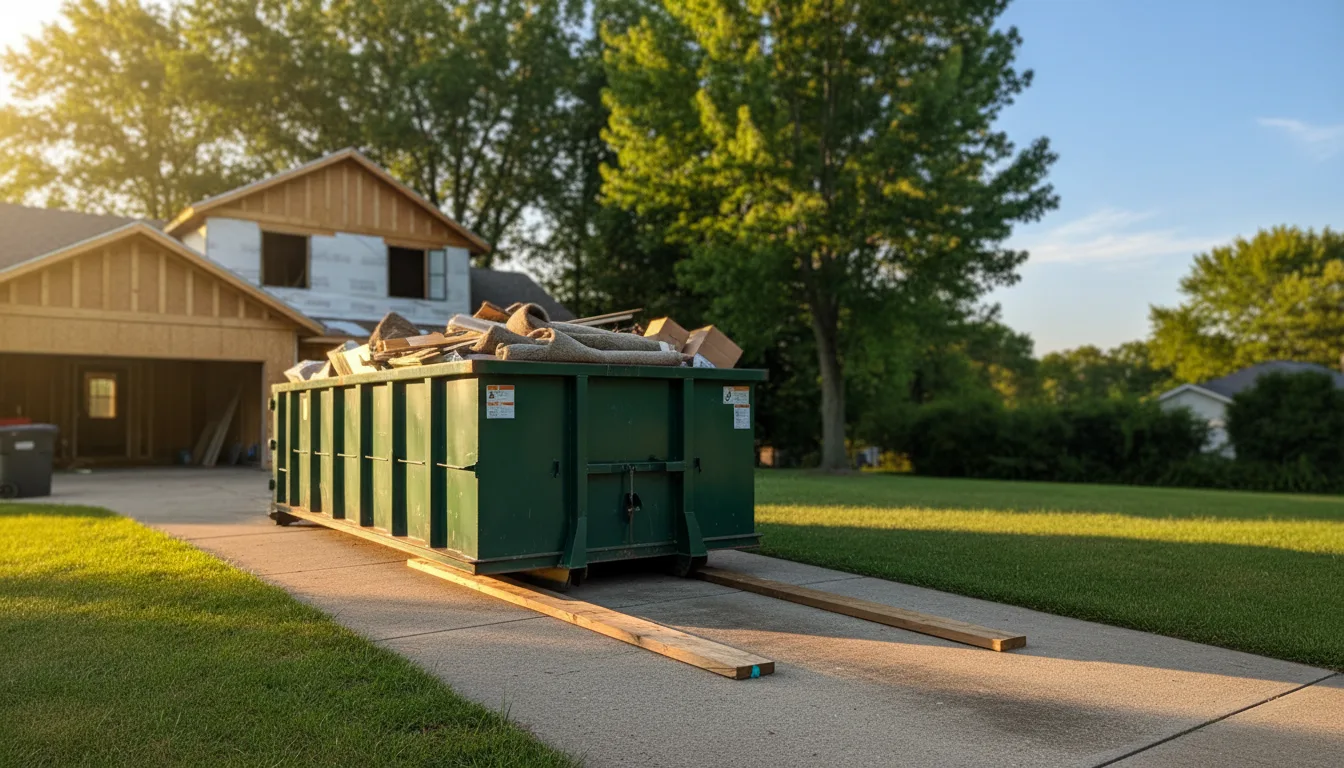
The ideal spot is directly under the roofline where the crew tosses debris, close enough that shingles land in the can and not in the flower beds. On a driveway, that usually means the can sits near the garage with boards under the rails to protect the pavement. Watch overhead: the truck needs roughly 23 feet of clearance to raise and set the container, so service drops and low branches matter. If the only workable spot is the street, a city right-of-way permit is often required.
Keeping the roofing load clean
Many areas have shingle recyclers that grind asphalt shingles for paving, and some haulers route a pure shingle load there. Keep out gutters full of leaves, trash, and lumber scraps if you can. Metal flashing and drip edge are usually fine in the can, though some crews pull it for scrap. Load from the far end toward the door, keep material below the rail, and do not pile shingles on the lip, since an overfilled can will not be tarped and hauled.
Have the square count and layer number handy, then call (877) 789-1790 to get a can lined up for your Morris, MN roof job.